
A wallet can make a transaction easier to understand without making the blockchain cheaper. That distinction is the most important fact to keep in mind when evaluating Rabby Wallet, especially if your goal is gas optimization rather than simply signing transactions faster. Network fees are determined by blockspace demand, transaction complexity, and the fee market of the chain you are using. A browser extension can improve the decisions around those variables; it cannot repeal them.
For US-based DeFi users, this matters because a seemingly small mistake can turn into a costly one: approving the wrong token, setting an unsuitable fee, signing a transaction whose destination is unclear, or retrying a failed transaction repeatedly. Rabby’s practical value is best understood as a decision-support layer between a decentralized application and the user. The question is not whether it promises “cheap gas,” but whether its transaction context helps you choose safer timing, better routes, and fewer unnecessary actions.
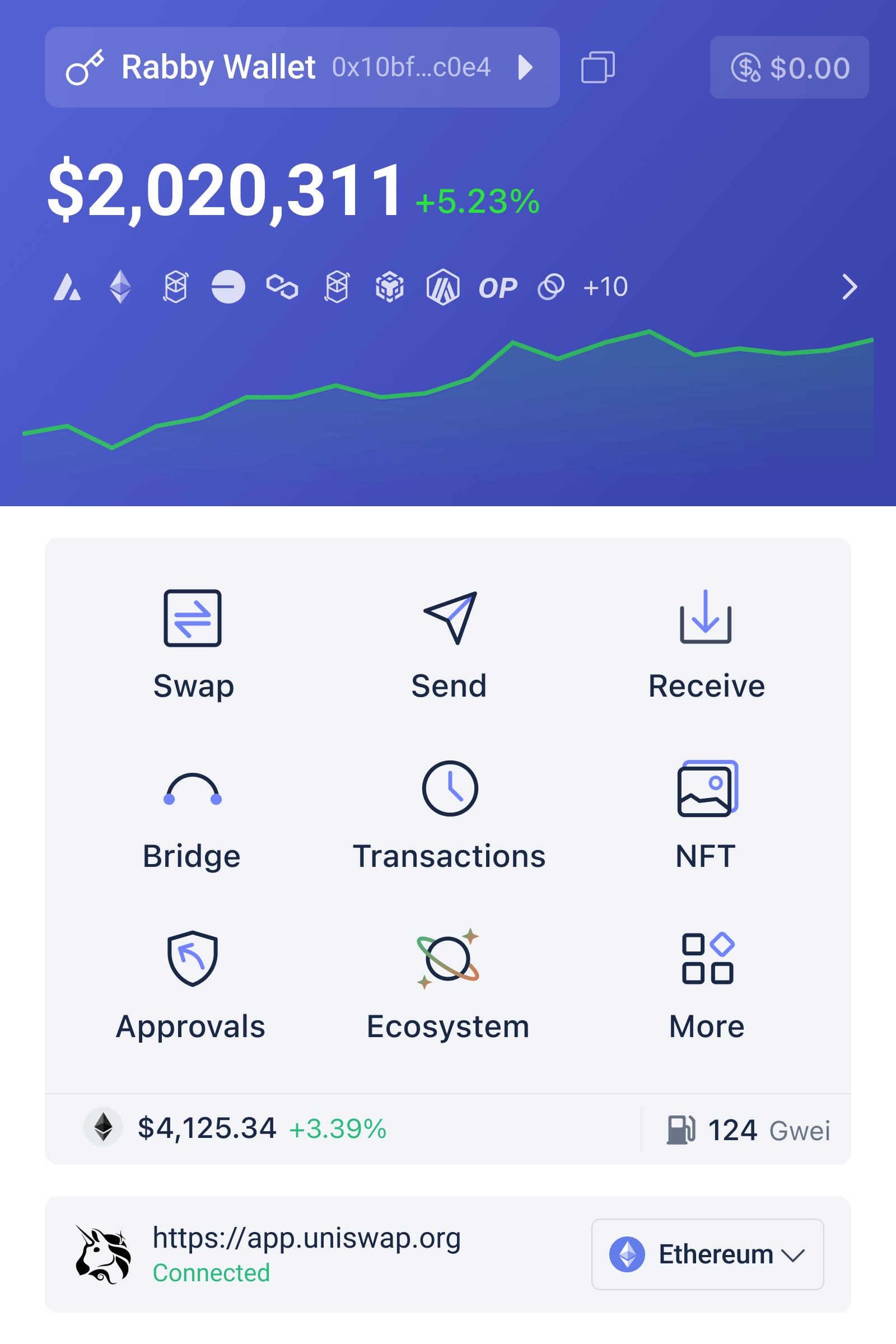
The first myth: a wallet extension controls the gas market
Gas is the computational work required to execute an operation on a blockchain. On Ethereum-compatible networks, a transaction’s total fee is broadly related to the amount of gas used multiplied by the price paid per unit of gas. A simple transfer uses less computation than a multi-step decentralized exchange swap, a liquidity-position update, or a transaction that interacts with several smart-contract functions.
The price side is also easy to misunderstand. On networks using Ethereum’s fee-market design, the base fee is influenced by congestion and is burned, while a priority fee, often called a tip, helps determine how attractive the transaction is to block producers. Wallets can suggest fee settings based on current conditions, but the underlying market still decides whether blockspace is scarce. If demand is high, a better interface may help you avoid overpaying; it does not make scarce blockspace abundant.
This corrects a common misconception: “gas optimization” does not necessarily mean reducing the quoted gas price. It can mean reducing the number of transactions, choosing a less congested network, avoiding a failed transaction, selecting a more efficient contract route, or waiting until the transaction is economically sensible. These are different levers. Confusing them leads users to chase a low fee setting while ignoring the much larger cost of an unnecessary approval or failed swap.
What Rabby adds to the transaction decision
A browser wallet sits at a sensitive boundary. A DeFi application requests an action, the wallet presents that action for approval, and the blockchain later enforces whatever was signed. The wallet therefore has an opportunity to translate technical transaction data into a more understandable review: which network is involved, which contract is being called, what assets may move, and how much fee the transaction could require.
That context is valuable because the human-readable label on a DeFi website is not the same thing as the machine-readable transaction. A button marked “Deposit” may invoke a token approval first, followed by a deposit call. A “Claim” action may also include a token transfer or a permission change. The interface can reduce uncertainty, but it cannot guarantee that a contract is honest or that a protocol will remain solvent. Simulation and warning features are useful signals, not legal or financial assurances.
If you are installing the extension, use the project’s official distribution path and check the publisher, domain, and requested permissions before proceeding. A useful starting point for learning the installation process is the rabby wallet guide. Never treat a search advertisement, a message from a stranger, or an unsolicited support link as proof of authenticity. Browser extensions are software with privileges, and a convincing imitation can be more dangerous than an obviously malicious website.
The safest setup also separates convenience from custody. A browser extension may manage access to a software wallet, but the recovery phrase remains the critical control point. Anyone who obtains it can generally recreate the wallet elsewhere. Storing it in a cloud document, taking a screenshot, or typing it into a website defeats the purpose of using a wallet. For larger balances, connecting a hardware wallet can reduce exposure to browser-based key theft, although it does not prevent a user from approving a harmful transaction on the device.
Gas optimization begins before the confirmation screen
The most powerful savings often occur before a transaction is constructed. Consider a token swap. The eventual fee may depend on the route, the number of pools involved, the contract design, and the network selected. A direct route may use less gas but produce a worse exchange rate. A multi-hop route may consume more gas while obtaining a better price. The economically correct choice is not the lowest gas quote; it is the best net outcome after fees, price impact, and slippage are considered together.
This is a crucial trade-off for DeFi users. Suppose one route saves a few dollars in gas but produces a larger price loss because liquidity is thin. The cheaper transaction is not the cheaper trade. Conversely, an elaborate route can look sophisticated while its additional execution cost overwhelms the improvement in quoted price. Gas optimization therefore belongs inside a broader transaction-cost calculation: expected output minus network fee, price impact, protocol charges, and the risk of execution failure.
Approvals create another recurring source of waste. Many token interactions require the user to authorize a contract to spend a specified amount of a token. That approval is usually a separate transaction from the later swap, deposit, or lending action. Users who approve a small amount repeatedly may increase the number of fee events; users who approve an unlimited amount reduce future approval friction but create a larger allowance risk if the contract is compromised or misused.
There is no universal answer. A limited approval can be more conservative, particularly when interacting with a new or uncertain contract. A broader approval may be operationally convenient for a frequently used, well-understood protocol. The decision depends on the value at risk, the contract’s trust assumptions, and how often the permission will be used. A wallet can help reveal the allowance request, but the user still has to decide whether convenience is worth the additional exposure.
Three different ways to reduce a fee
Reduce the number of transactions
Every on-chain action can carry a base cost. If a workflow requires an approval, a deposit, a position adjustment, and a claim, combining actions may sometimes reduce overhead—but only if the protocol supports safe batching or multicall behavior. A batch is not automatically cheaper. It can increase computational complexity, and a single failure may revert the entire operation. The correct question is whether the protocol’s contract design makes batching reliable and whether the added complexity is visible to the user.
Choose the right network
Ethereum mainnet, layer-2 networks, and other Ethereum-compatible chains do not share one uniform fee market. Layer-2 systems generally execute transactions in a separate environment and periodically settle data or proofs to a base chain. Their fees can be lower, but the final cost depends on the network’s own demand, the data posted for settlement, bridging requirements, and the availability of the application you need.
A cheaper network is not useful if your assets are on another chain and the bridge cost, delay, or smart-contract risk exceeds the saving. Nor should a user select a chain merely because a wallet displays a low fee. Check whether the protocol is deployed there, whether liquidity is adequate, whether withdrawals are practical, and whether the asset’s address is the correct one. Cross-chain convenience can conceal a new set of trust assumptions.
Avoid failed transactions
A reverted transaction is one of the clearest examples of why gas and outcome are separate. The contract may reject the operation after consuming computational resources, so the user can pay a fee without receiving the intended result. Common causes include expired swap deadlines, insufficient token balances, incorrect allowances, slippage limits that are too tight, or a position changing before the transaction is mined.
Transaction simulation and pre-signing warnings can make these conditions easier to notice. Yet simulation has a boundary: it is a forecast based on a particular blockchain state. Between simulation and confirmation, prices, liquidity, balances, and contract conditions can change. A simulation is therefore evidence about what may happen, not a guarantee about what will happen. This is one reason high-value transactions deserve a deliberate review rather than an automatic click-through.
Gas price, gas limit, and slippage are not interchangeable
Many users treat all transaction settings as one “fee” control. They are not. The gas limit is the maximum computational allowance for execution; setting it too low can cause failure, while setting it higher does not necessarily mean the full amount will be spent. The gas price or fee parameters influence inclusion priority and cost per unit. Slippage is a trading tolerance that determines how much the received asset may differ from the quoted amount. Raising slippage may improve the chance of execution, but it can worsen the trade’s economics and increase exposure to adverse price movement.
This separation produces a practical review habit. Before signing, ask four questions: What contract am I calling? What assets can leave my wallet? What is the maximum network fee? What outcome will make this transaction acceptable? A wallet interface can organize these questions, but the user’s intent remains the reference point. If the requested action does not match the goal you had in mind, stop—even if the fee appears small.
Where the wallet’s usefulness ends
Rabby can improve visibility, but it cannot audit every smart contract, reverse a confirmed transaction, guarantee that a token has real liquidity, or protect a user who intentionally confirms an unfamiliar permission request. It also cannot eliminate phishing outside the wallet, prevent malware from altering a copied address, or make a risky bridge risk-free. Security is a system property: wallet software, browser hygiene, device security, protocol quality, key management, and user judgment all contribute.
There is also a behavioral limitation. More information does not always produce better decisions. Warnings can become background noise when users see them frequently, and a confident-looking simulation can encourage overreliance. The strongest use of a wallet is not to outsource judgment but to slow down the moments where judgment matters most: new contracts, unusual token approvals, high-value transfers, unfamiliar chains, and transactions whose economic benefit is marginal after fees.
No recent project-specific news is available for the current eligible week, so there is no responsible basis for attributing a new feature, launch, or roadmap change to Rabby here. For readers watching the category, the more durable signals are functional: whether transaction explanations become clearer, whether support for relevant networks remains reliable, how permission warnings handle complex DeFi calls, and whether users can distinguish a simulation from a guarantee. Those indicators say more about practical value than promotional claims about speed or savings.
A reusable framework for cheaper, safer DeFi actions
Before signing, classify the transaction along three dimensions. First, measure necessity: is this action required now, or can the workflow be consolidated or postponed? Second, measure exposure: what allowance, asset transfer, or contract permission is being granted? Third, measure economics: what is the expected benefit after gas, slippage, price impact, and the possibility of failure?
That framework is intentionally simple because gas optimization is often a coordination problem rather than a button in a wallet. If the network is congested, waiting may help. If the route is inefficient, another pool or chain may help. If approvals dominate the workflow, permission management may help. If the transaction is unclear, better review—not a lower fee setting—is the appropriate response.
For a US user, the same discipline also helps with recordkeeping. Save transaction hashes, understand which network was used, and distinguish a network fee from a protocol fee or trading loss. Those categories may matter later for portfolio accounting and tax documentation, although a wallet display is not a substitute for professional tax advice. Clear records are useful precisely because blockchain transactions are difficult to undo and easy to misremember.
Frequently Asked Questions
Does Rabby Wallet automatically make gas fees cheaper?
No. Gas fees are set by the network’s fee market and by the computational work required by the transaction. Rabby may help you review fee estimates, understand the action, identify possible failures, or choose among available settings, but it cannot guarantee a lower fee. The largest savings often come from avoiding unnecessary transactions, selecting a suitable network, and preventing failed execution.
Is a lower gas setting always the best choice?
No. A lower fee may reduce priority and increase the chance of delay or non-inclusion, depending on the network. For a time-sensitive swap, delay can change the market price enough to outweigh the intended saving. For a non-urgent claim or transfer, waiting may be reasonable. The right setting depends on urgency, network conditions, and the value of successful execution.
Can transaction simulation guarantee that a DeFi transaction is safe?
No. Simulation can reveal likely balance changes, reverts, and unexpected calls under a particular state. It cannot guarantee that a contract is trustworthy, that the market will not move, or that conditions will remain unchanged before confirmation. Treat simulation as a valuable warning and analysis tool, not as an audit or insurance policy.
Should I use unlimited token approvals to save gas?
Unlimited approvals can reduce repeated approval transactions, but they increase the amount a contract may be able to spend if the allowance is abused or the contract is compromised. Limited approvals generally reduce that exposure while adding possible transactions and inconvenience. Consider the protocol’s trust level, the amount at risk, and how frequently you expect to use it rather than applying one rule to every token.
The sharpest way to think about Rabby is not as a gas-discount tool, but as an interpreter for a transaction system that is otherwise easy to misread. Used carefully, that interpretation can improve timing, reduce avoidable failures, and expose permissions before they become expensive lessons. The blockchain still sets the price of computation. The user’s advantage comes from understanding what is being computed, why it costs what it costs, and whether the transaction deserves to happen at all.